How Predictive Intelligence Builds Better Workplaces
Most organisations don't have a data problem — they have a clarity problem. Predictive intelligence connects human behaviour, building performance, and external context so the workplace can be understood, not just observed.
It’s Not a Data Problem. It’s a Clarity Problem.
Most organisations don’t have a data problem. They have a clarity problem—and it’s quietly costing them the ability to understand their own workplace.
Offices are now saturated with signals—badge swipes, desk sensors, booking systems, HVAC data, energy readings, HR calendars. Yet none of it, on its own, explains the one thing leaders actually care about: what makes people choose to come in—or quietly opt out.
The Comfortable Illusion of Control
So decisions get made on fragments. Utilisation reports that describe yesterday. Attendance trends that flatten behaviour into averages. Surveys that capture sentiment long after the moment has passed. It creates a familiar illusion of control, while the underlying reality stays invisible.
Facility Management reacts to occupancy after it happens. Workplace Strategy designs based on what is easy to measure rather than what is actually felt in the space. Corporate Real Estate commits capital to assets whose future demand is still largely guessed.
The Decision Every Employee Quietly Makes
And in the background, employees make very simple decisions every day: Is it worth the journey? Will I get something here I can’t get elsewhere? Does the space actually work for the way I need to work today?
That decision is rarely about policy. It’s about friction, energy, environment, people, timing. It is behavioural, not procedural.
The Missing Layer Isn’t Another Dashboard
The missing layer is not more dashboards. It is connection. The ability to link human behaviour, building performance, and external context into a single system that actually explains demand.
When those signals come together, something shifts. Patterns stop being retrospective and start becoming predictive. You begin to see not just that Tuesdays are busy, but why they cluster. Not just that certain floors underperform, but what conditions suppress return. Not just that hybrid policies “work,” but how they shape movement, collaboration, and absence.
This is where the real change happens: the workplace stops being observed and starts being understood.
Run the “What If” Before the What Happened
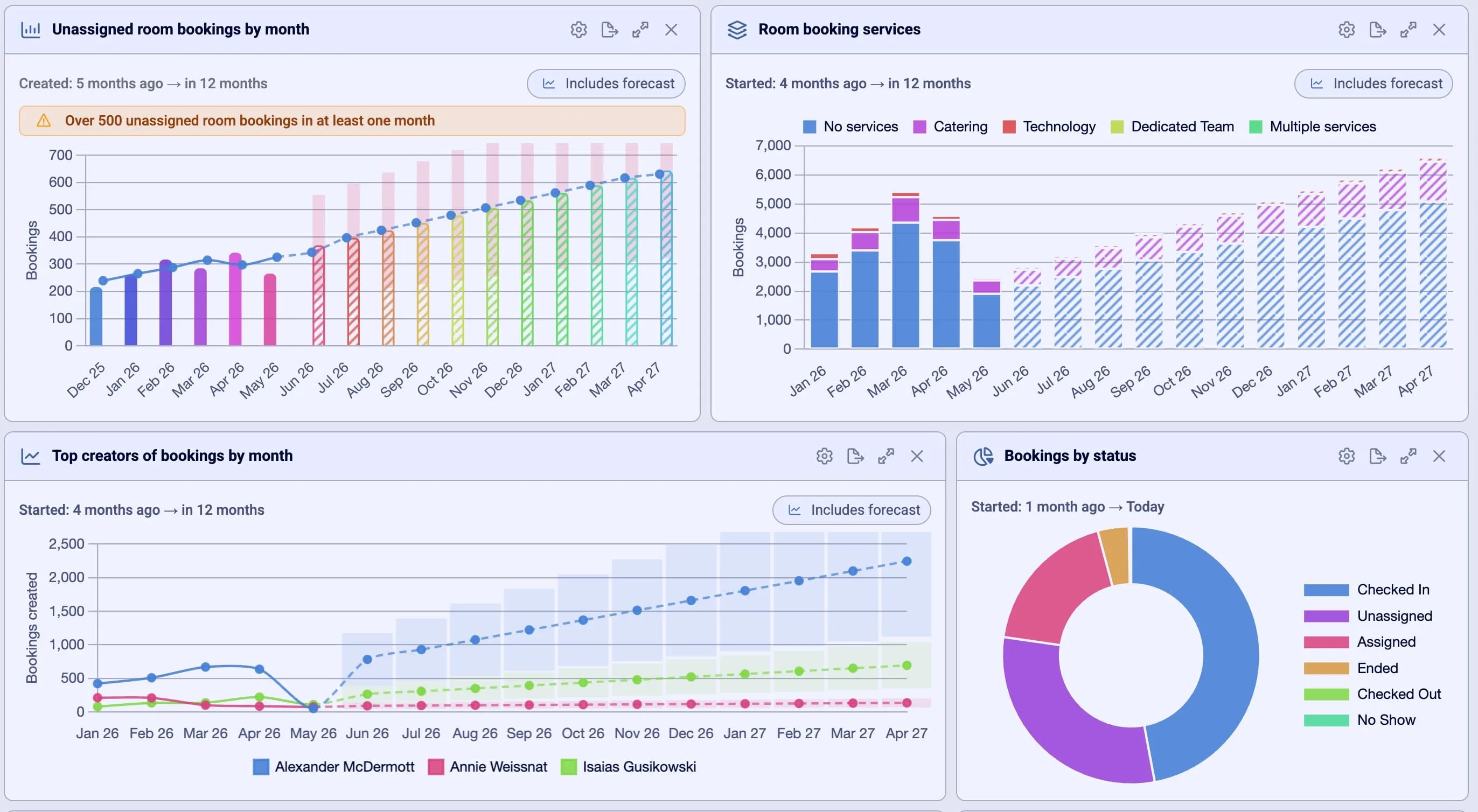
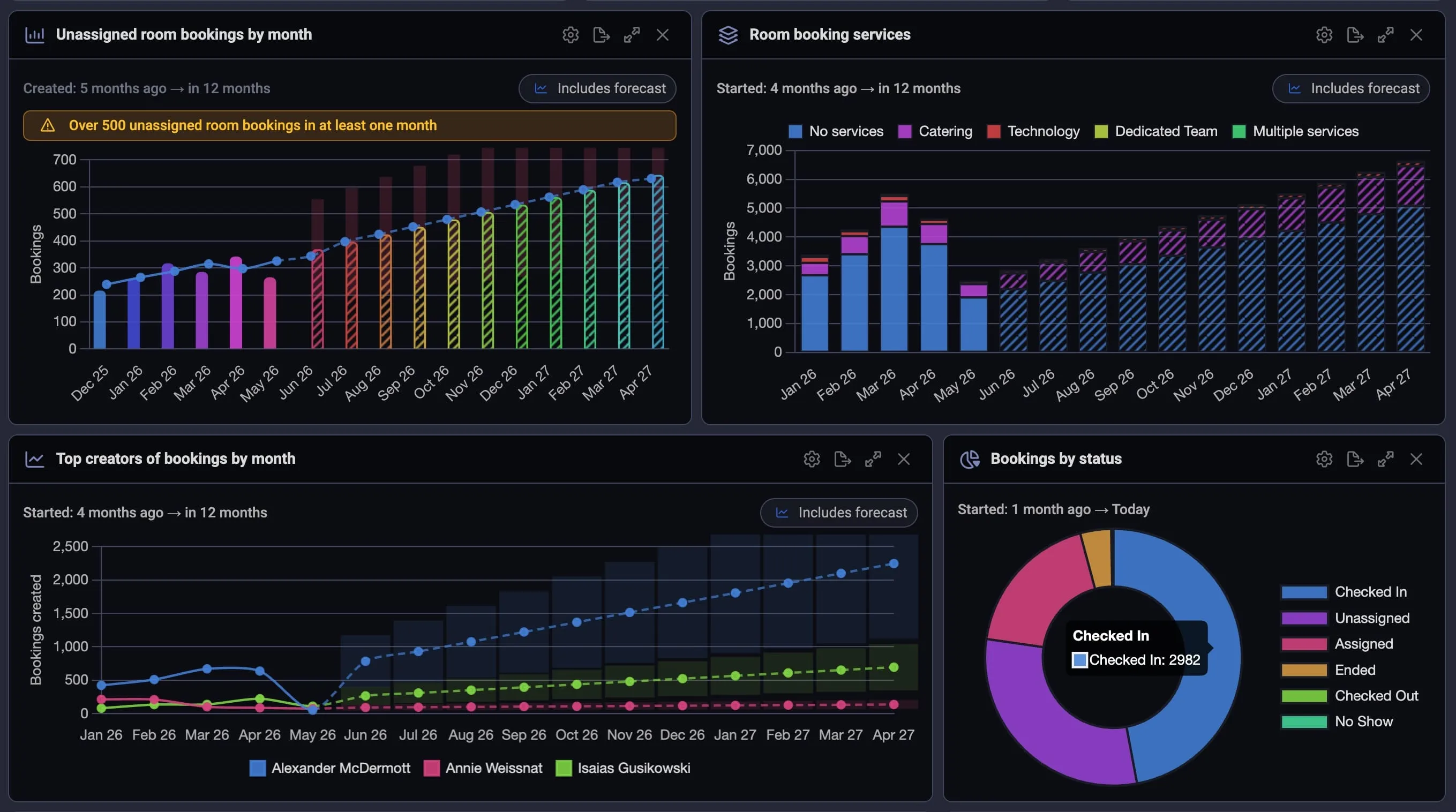
With New Wave NextGen, that understanding becomes usable. Human data, IoT signals, and external factors are brought into one predictive layer that allows organisations to run real “what if” scenarios—before decisions are made, before space is redesigned, before policy is enforced.
What if we change anchor days? What if we reduce space by 15%? What if air quality drops on certain floors? What if transport disruption becomes normal on key commuting routes? The workplace stops being static and starts behaving like a system you can test, stress, and shape.
From Reaction to Anticipation
For FM, it means shifting from reaction to anticipation—cleaning, energy, and maintenance driven by what is about to happen, not what already did. For Workplace Strategy, it means designing for behaviour that is proven, not assumed. For Corporate Real Estate, it means portfolios aligned to future demand, not historical averages.
Why Return-to-Office Really Fails
But the deeper shift is more human than operational.
Return to office doesn’t fail because of resistance. It fails because the value is often unclear. People don’t commute for presence—they commute for something worth the effort. Collaboration that actually moves work forward. Environments that lift focus. Moments that remote work can’t replicate.
Predictive intelligence is what makes that visible. It shows not just how space is used, but what conditions create pull. And once you can see that, you can start designing for it deliberately.
Building a Workplace That Earns the Return
The opportunity is not to bring people back through policy. It is to build a workplace that naturally earns the return.
And that only becomes possible when fragmented data stops being reported—and starts being understood.